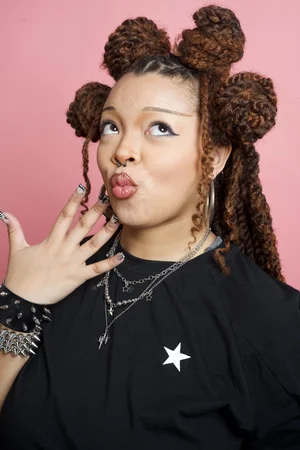
A Love Letter To: the black maximalist
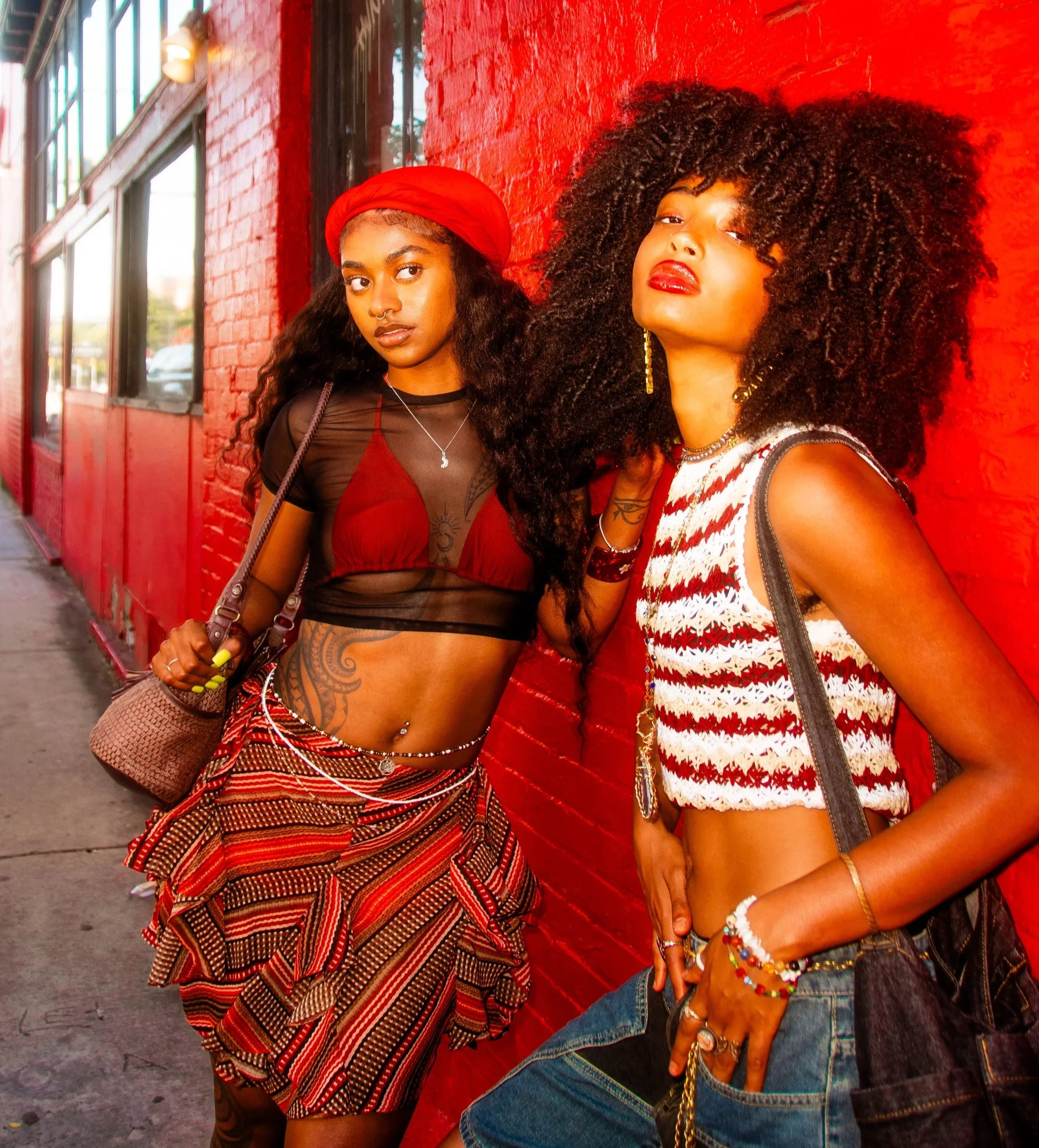
Photographer: Isaac Chery
Maximalism, by definition, is a design and fashion philosophy centered on abundance, layering, bold color, texture, pattern, and excess of detail. It is often critiqued as “excess,” “overdoing it,” or simply “too much.”
But the real question is, who decides what too much is?
Because when Black people show up boldly, layered in color, texture, jewelry, hair, and expression, are we truly doing “too much”? Or are we just doing what we have always done, showing up fully?
Is Black maximalism a stylistic choice, or is it a cultural inheritance?
Because in a world where minimalism is praised as “clean,” “elevated,” and “luxury,” Black expression has historically been labeled the opposite. Loud. Tacky. Ghetto. Unrefined. Yet somehow, the same styles we are mocked for today become the very trends the runway worships tomorrow.
For Black people, maximalism has never just been a trend. It is a language rooted in celebration, protection, and visibility. It is how we announce ourselves in a world that constantly tries to shrink us.
And that language begins at home, in childhood.
Black Childhood: Our First Introduction to Maximalism
“Before we ever knew the word “maximalism,” we were already living it.”
For many Black girls, it began with colorful beads clicking against the ends of braids. Bobos and barrettes stacked with no restraint. Oversized bows. Ponytail holders in every shade imaginable. Hair was never just hair. It was art, identity, culture, and community all at once. Black hair, especially in childhood, became our first canvas. It taught us early that beauty does not have to be subtle. That expression can be bold. That adornment is not something to earn, it is something we deserve.
And for Black boys, maximalism showed up differently. Fresh haircuts with sharp parts and etched designs. Clean sneakers straight out the box. Oversized graphic tees draped to the knees. Gold chains decorating the chest. Watches too big for small wrists. Du-rags in every color and texture worn with pride and protection. Style became one of the first ways Black boys learned how to be seen in a world that already watched them closely. Black boys often claimed their maximalism through self-curation, through hip-hop, through sports culture, through streetwear, through swag.
What ties both of these experiences together is intention. Black childhood does not stumble into maximalism. It is born into it.
The irony of it all is that so many of the styles once labeled “ghetto,” “too much,” or “unprofessional” on us become high fashion years later. Beads turn into luxury accents. Braids become runway staples. Fresh fades become editorial. Baby hairs become design details. What was once mocked becomes monetized.
Black childhood doesn’t just introduce us to maximalism. It trains us in it.
And as we grow, that training evolves into full identity.
Black Aesthetics and Fashion as Living Maximalism
Black maximalism shows up in many visual dialects, but the message is always the same.
We will not make ourselves smaller.
Black maximalism doesn’t need translation. It is already clear.
It shows up in Black boho through layered jewelry, waist beads, wraps, and soft rebellion. It shows up in Black goth and alt spaces through armor made of chains, platforms, and shadows. It shows up in Black streetwear through stacked statements, loud sneakers, heavy graphics, and presence that cannot be ignored.
These are not costumes. These are not phases. These are entire identities in motion.
What connects them all is not just excess. It is defiance. Defiance to be subtle for comfort and defiance to dilute the natural-born expression to fit into someone else’s version of “acceptable.”
And that defiance is exactly why it draws so much attention, and so much criticism.
The unfortunate Duality: celebration and critique
Black women, especially, are constantly boxed into one exhausting stereotype.
“Too much.”
Too loud.
Too flashy.
Too emotional.
Too bold.
Too adorned.
Too visible.
The same dramatic nails, bold makeup, layered jewelry, and statement looks praised on non-black bodies are frowned upon ours. Where another influencer is “editorial,” a Black woman is “doing too much.” Where a runway model is “avant-garde,” a Black girl is “unprofessional.”
This is the duality of Black maximalism.
Admired from a distance. Policed up close.
Our aesthetics have always fueled global fashion, social media trends, luxury markets, and entire industries, while the people who originate them are still surveilled, criticized, and erased from the narrative.
The world loves Black maximalism, but not always Black people.
We live in the contradiction of being the origin and the outsider. The blueprint and the suspect. The inspiration and the threat.
And yet still, we show up layered, adorned, and luminous.
Personal Reflection:
My Own Relationship with Black Maximalism
As a kid, my relationship with maximalism started with my hair. From the bobos that hugged my puffs to the barrettes that scattered my braids. The feeling of sitting between my mom’s knees while she parted, braided, decorated, and created (all while snatching my hair with a hard bristle brush). My self-expression became something to celebrate before I even knew that the world would later ask me to minimize it.
Now, I see maximalism as freedom. Choosing abundance in a world that’s constantly demanding restraint. Choosing expression in a society that feels safer when we are quieter.
My own style is constantly misunderstood. Policed. Questioned. I have also seen it celebrated. And that dual experience is exactly why ALTxATL exists. This platform was created to hold space for the boldness that gets misread, for the expression that gets labeled “too much,” and for the creativity that refuses to be small.
I’ve celebrated that boldness through this platform the same way I learned to wear it in real life. Loudly. Intentionally. Without apology. Both realities live inside me, the love and the resistance. And both remind me why Black maximalism matters.
A Closing Love Letter
Black boy.
Black girl.
Your beads.
Your chains.
Your fresh fades.
Your stacked rings.
Your big bows.
Your sneakers.
Your loud colors.
Your layered patterns.
Your maximalism is not chaos.
It is not mess.
It is not “too much.”
It is memory.
It is inheritance.
It is protection.
It is expression.
It is resistance.
It is freedom.
From girlhood to boyhood, from hair to streetwear, from softness to armor, from celebration to criticism, this boldness has always lived inside us. It is not something we picked up. It is something we were born carrying.
It is simply in our blood to be over the top.
And we deserve to be.